
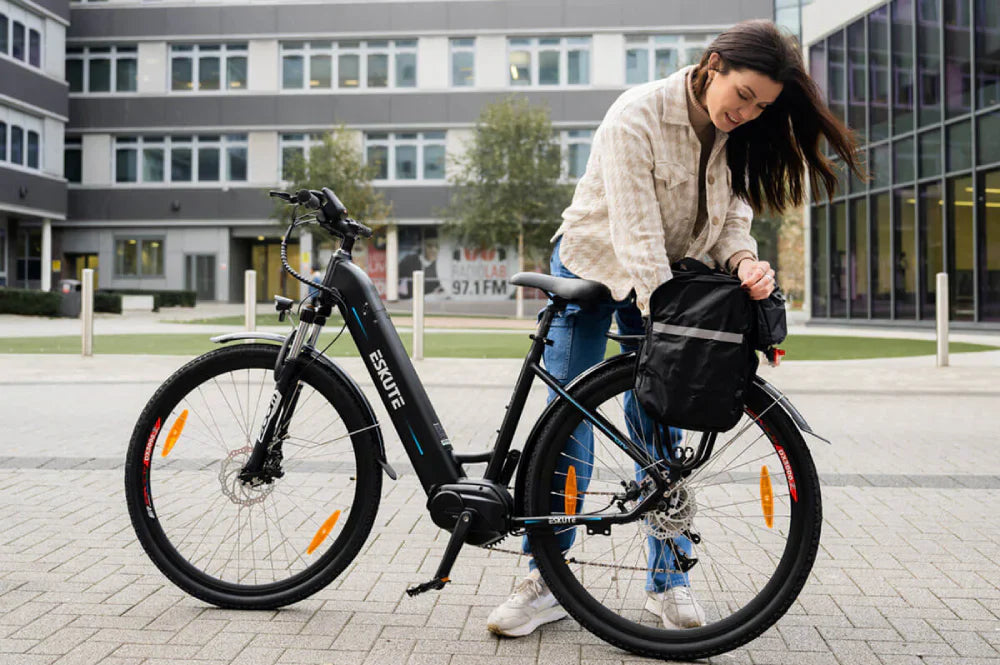
As electric bikes reshape urban mobility across Europe, many new riders face a crucial decision before making a purchase: should you choose a Pedelec or a Throttle e-bike?
While the idea of twist-and-go throttle acceleration sounds appealing, navigating the legal landscapes, motor power regulations, and commuting requirements in Europe is essential. Riding an uncertified e-bike on public roads can lead to hefty fines or vehicle confiscation.
In this comprehensive guide, we will clarify the core differences between Pedelecs vs. Throttle e-bikes, detail the exact European e-bike regulations, and help you choose the legal, hassle-free ride that perfectly matches your lifestyle.

What is a Pedelec? (The Gold Standard in Europe)
The term Pedelec stands for Pedal Electric Cycle. As the name suggests, a Pedelec relies on a pedal-assist system (PAS). The electric motor does not work on its own; instead, it acts as a supportive partner, multiplying your natural pedaling effort.
When you stop pedaling or apply the brakes, the motor instantly cuts off.
Why Pedelecs are Perfect for European Commuters:
- Fully Legal on Bike Paths: Because they are legally classified as regular bicycles, you can ride them on park paths, cycle lanes, and pedestrian-friendly zones.
- No License or Insurance Required: You do not need a driver’s license, license plates, road tax, or mandatory third-party liability insurance to ride one.
- Superior Battery Range: Because your physical effort shares the load, Pedelecs are incredibly energy-efficient, offering significantly longer ranges on a single charge compared to pure-electric rides.
What is a Throttle E-Bike? (Pure Electric Power)
A Throttle e-bike allows the motor to propel the bicycle forward without any pedaling. By twisting a motorcycle-style handlebar grip or pressing a thumb lever, the rider can cruise on pure electric power.
Why Riders Look for Throttles:
- Effortless Cruising: Ideal for those recovering from an injury, carrying heavy cargo, or wishing to arrive at work completely sweat-free.
- Easy Hill Climbs: Instant acceleration from a dead stop when tackling steep inclines.
E-Bike Laws in Europe: Understanding the EN 15194 Standard
To ride freely in the European Union (EU) and the United Kingdom (UK) without registration, your e-bike must comply strictly with the European Standard EN 15194.
Here is the exact legal breakdown of what is allowed on public roads:
1. The 250W and 25 km/h Rule
Under EU law, a standard road-legal e-bike must have a maximum continuous rated motor power of 250 Watts. Additionally, the electric assistance must automatically cut off once the bike reaches 25 km/h.
2. The Legal "Walk Assist" Throttle (6 km/h)
Can a legal European e-bike have a throttle? Yes, but only under strict conditions. A throttle on a legal Pedelec is restricted to 6 km/h (3.7 mph). This is legally classified as a "start-up assist" or "walk assist," designed to help you push a heavy bike up a ramp or get moving smoothly from a red light.
3. What Happens If a Throttle Goes Faster Than 6 km/h?
If your e-bike can travel up to 25 km/h (or faster) on throttle power alone without pedaling, it is no longer classified as a bicycle. In Europe, it is categorized as a speed pedelec or a moped (Category L1e-A/B). To ride this on public roads, you must:
- Be at least 15 or 16 years old (depending on the country).
- Hold a valid AM/moped driving license.
- Register the vehicle and display a rear license plate.
- Pay for mandatory road insurance.
- Wear a certified motorcycle helmet (standard bicycle helmets are not legally sufficient).

Comparison: Road-Legal Pedelec vs. Full-Throttle E-Bike in Europe
To help you visualize the differences and avoid accidental legal trouble, use this quick reference table:
| Regulatory Feature | Pedelec (e.g., Eskute C202 / D202) | Full-Throttle E-Bike (Moped Category) |
| Max Motor Power | 250W Continuous | Often 500W - 750W+ |
| Top Speed with Assist | 25 km/h | 25 km/h to 45 km/h |
| Throttle Function | Max 6 km/h (Walk-assist only) | Full speed assistance without pedaling |
| Where to Ride | Public streets, bike lanes, forest paths | Strictly public roads (banned on cycle lanes) |
| License & Plates | Not Required | Mandatory (AM License & License Plate) |
| Insurance & Tax | Not Required | Mandatory |
Which One Should You Buy?
Choosing between these two depends entirely on where you plan to ride and your local infrastructure.
Why You Should Choose a Compliant Pedelec:
If you want a stress-free daily commute where you can easily use designated bike lanes, cut through parks, and park your bike on standard racks without worrying about registration, police fines, or expensive insurance, a 250W Pedelec is your absolute best option.
Modern pedal-assist sensors (like those found on Eskute models) are so responsive that they make climbing steep hills feel flat, giving you all the benefits of effortless riding while keeping your vehicle completely legal.
👉 [Browse Eskute's EU-Compliant Pedelec Collection]

When to Consider a Throttle E-Bike:
If you only plan to ride on private land (such as closed estates or private tracks), or if you are willing to go through the official governmental process of vehicle registration, paying annual road insurance, and wearing a moped helmet, then a speed-pedelec/throttle bike could work for your needs.

Frequently Asked Questions (FAQ)
Q1: Can I add an aftermarket throttle to my Eskute e-bike in Europe?
A: While some aftermarket kits allow this, doing so on public roads in Europe will immediately classify your bike as an unregistered motor vehicle. We strongly advise keeping your Eskute in its standard, certified 250W pedal-assist configuration to ensure you remain fully compliant and retain your manufacturer’s warranty.
Q2: What is the difference between a torque sensor and a cadence sensor on a Pedelec?
A: A cadence sensor acts like an on/off switch—once you start pedaling, it signals the motor to give you assistance. A torque sensor is much more advanced; it measures how hard you are pushing on the pedals and matches your effort seamlessly, creating a highly natural and exceptionally smooth riding experience.
Q3: Does a Pedelec charge the battery when I pedal?
A: Generally, no. E-bike regenerative braking systems are heavy and highly inefficient for everyday use. Instead, the battery is easily charged by removing it and plugging it into a standard household wall outlet for 4 to 6 hours.

Leave a comment
This site is protected by hCaptcha and the hCaptcha Privacy Policy and Terms of Service apply.