
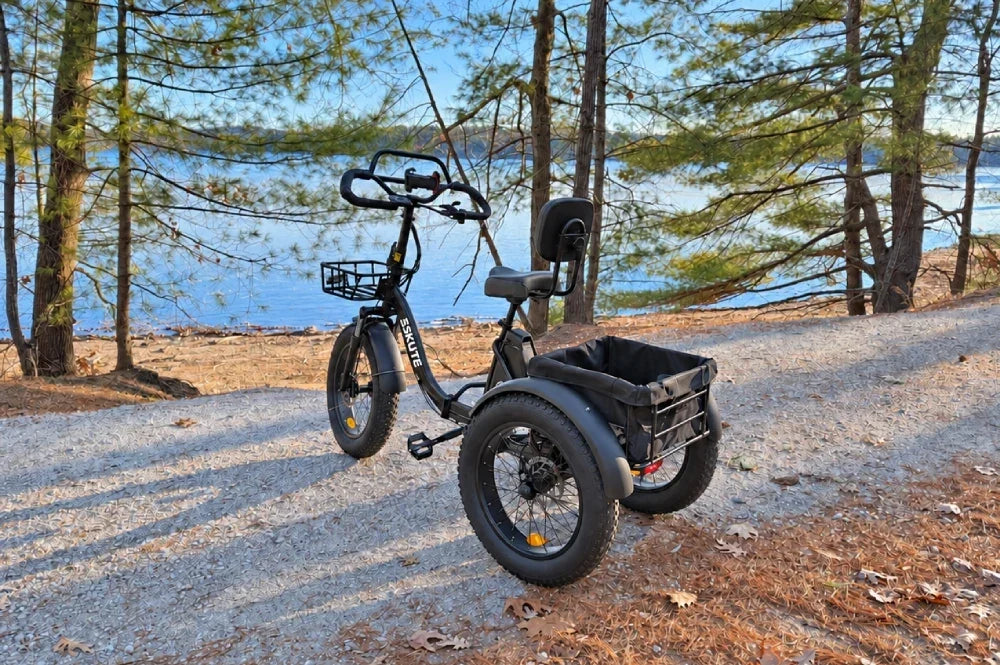
Electric trikes (three-wheeled e-bikes) are growing rapidly in popularity across Europe. Offering incredible stability when stopped, low step-through access, and generous cargo capacity, models like the Eskute T302 Pro make daily errands and heavy hauling effortless.
However, riding a three-wheeled trike feels fundamentally different from riding a traditional two-wheeled bicycle. While a standard bike leans naturally into corners, a trike stays upright on three wheels. Attempting to ride a trike like a regular bicycle is the most common mistake beginners make.
This practical guide provides essential safety steps, turning techniques, and riding habits to help you confidently master your electric cargo trike.
Before Your First Ride — Safety Checklist
Before heading out into traffic or loading up groceries, perform a quick pre-ride safety inspection:
- Check Tire Pressure: Ensure all three tires are inflated according to the recommended PSI on the tire sidewall. Uneven pressure in the rear tires can cause the trike to pull to one side.
- Test Brakes & Parking Brake: Squeeze both brake levers to confirm strong stopping power. Ensure the mechanical parking brake lock engages properly when parked.
- Inspect Frame Locks & Saddle: Double-check that all quick-release clamps (seatpost, handlebars, folding hinges) are securely latched.
- Secure the Battery & Cargo: Confirm the battery is key-locked in place and any basket cargo is strapped down firmly.
Choose the Right Place to Practise
Do not start your first trike ride on a busy road or steep hill. Find a wide, flat, open space—such as an empty parking lot or quiet paved plaza—free of traffic, pedestrians, and kerbs.
Always set your pedal assist to Level 1 (Lowest) when getting started.
How to Start and Stop Smoothly
Starting From a Standstill
- Keep handlebars pointed straight ahead.
- Keep your hands ready over the brake levers.
- Begin pedaling smoothly. Avoid turning the handlebars sharply at the exact moment you launch.
Braking and Stopping
- Apply both front and rear brakes evenly and gradually.
- Always bring the trike to a complete, straight stop before turning your handlebars.
- Engage the parking brake lock whenever leaving the trike unattended to prevent it from rolling away.
How to Turn an Electric Trike Safely
Turning is where three-wheel steering differs most from two-wheel balance. Remember this 5-step rule for every corner:
- Slow Down BEFORE the Turn: Complete all braking while still travelling in a straight line. Never enter a sharp corner at high speed.
- Look Where You Want to Go: Keep your eyes focused ahead on your exit path.
- Use a Wider Steering Arc: Turn the handlebars smoothly. Avoid sudden, jerky steering inputs.
- Keep Your Body Centred: Do not lean outward. Shift your body weight slightly toward the inside of the turn to maintain balanced downward pressure on all three wheels.
- Accelerate Only After Exiting: Wait until your front wheel is pointed straight again before increasing pedal assist acceleration.
Why Electric Trikes Do Not Lean Like Two-Wheel Bikes
On a standard bicycle, centrifugal force is offset by leaning your body and frame into the corner. A trike’s rear axle keeps the vehicle flat on the road. Taking a corner too fast forces weight onto the outer wheel, which can lift the inner rear wheel if speed is excessive. Controlled speed and smooth steering eliminate this risk.
How the T302 Pro Rear Differential Helps
The Eskute T302 Pro is equipped with a rear differential gear system. When turning, your outer rear wheel has to cover a longer distance than the inner rear wheel. The differential allows both rear wheels to rotate independently at different speeds during turns. This dramatically improves cornering smoothness, reduces tire scuffing, and prevents pushing straight ahead in turns.
Note: While a differential greatly improves steering comfort, it does not replace the need to slow down before sharp corners.
Handling Slopes, Off-Camber Roads and Uneven Surfaces
- Slopes & Hills: Always climb and descend slopes in a straight line whenever possible. Avoid making sharp 90-degree turns on steep inclines.
- Cambered (Slanted) Roads: Roads angled toward drainage gutters can make a trike feel tilted. Maintain a moderate speed, grip handlebars firmly, and lean your upper body slightly uphill if needed to keep weight balanced.
- Obstacles: Avoid running just one rear wheel over a high kerb or speed bump at speed; this causes uncomfortable swaying.
Carrying Cargo Safely
The Eskute T302 Pro features an impressive 200 kg total payload capacity. To keep your trike stable when loaded:
- Keep Heavy Items Low: Place the heaviest objects at the bottom of the rear basket.
- Distribute Weight Evenly: Balance loads equally between left and right sides of the rear cargo basket.
- Secure Loose Cargo: Use cargo nets or bungee cords to stop items from sliding around during turns.
- Allow Extra Braking Distance: Heavy cargo increases momentum; start braking earlier than usual.
Common Beginner Mistakes to Avoid
- ❌ Entering corners too fast.
- ❌ Braking hard while actively swerving handlebars.
- ❌ Overloading one side of the cargo basket.
- ❌ Putting feet down on the ground while turning (keep feet safely on pedals).
- ❌ Riding on open roads before practicing slow-speed turns in a safe area.
Frequently Asked Questions
Q: Is an electric trike easy to ride for beginners?
A: Yes! Most riders adapt within 15 to 30 minutes of low-speed practice in an open area.
Q: Can an electric trike tip over?
A: Like any vehicle, taking a sharp turn at excessive speed can lift a wheel. By slowing down before turns and steering smoothly, trikes are exceptionally stable and safe.
Q: Should I lean when turning an electric trike?
A: You do not need to lean aggressively, but shifting your upper body slightly toward the inside of the turn helps keep weight distributed evenly across all three wheels.



Zostaw komentarz
Ta strona jest chroniona przez hCaptcha i obowiązują na niej Polityka prywatności i Warunki korzystania z usługi serwisu hCaptcha.